
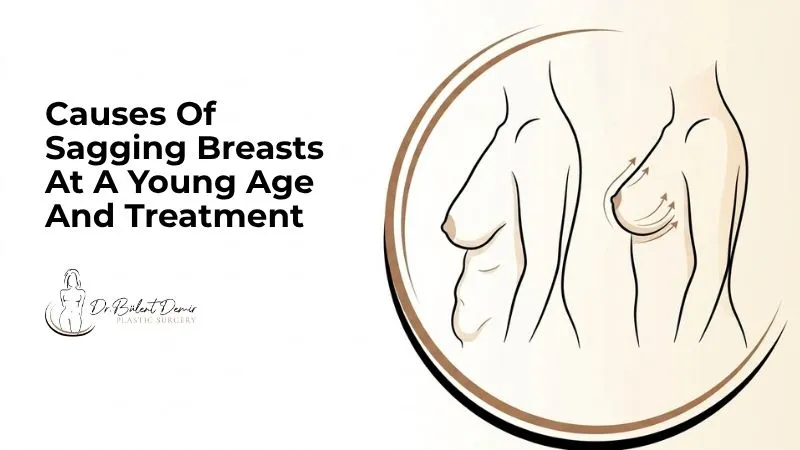
There is no single cause of breast sagging at a young age. Factors include breast size, skin elasticity, genetic factors and changes in body weight. Please continue reading our article to understand the possible causes and treatment of breast sagging at a young age.
What is breast sagging?
Breast ptosis (sagging breasts) is the condition in which the breast tissue and nipple are positioned below the natural crease beneath the breast. The doctor assesses this based on the distance between the sternal notch and the nipple. If this distance exceeds 21.5 cm, the condition is considered breast ptosis.
The degree of breast sagging varies from person to person. In cases of mild sagging, the nipple is positioned close to the inframammary fold and may point forwards. In cases of more pronounced sagging, however, both the nipple and a larger portion of the breast tissue may lie below the inframammary fold, and the nipple may point downwards.
Along with sagging, the fullness of the upper part of the breast decreases. This creates a hollow appearance in the breasts. If a patient is experiencing a problem with breast sagging, they may consult a surgeon. When carrying out an assessment, plastic surgeons evaluate the position of the nipple, skin quality, breast volume and the distribution of tissue together.
Why do breasts sag at a young age?
The shape of the breast is supported by the skin and connective tissues surrounding the breast tissue. As there is no muscle tissue within the breasts, when the volume of the breast changes or the supporting skin stretches, the breast tissue drops lower.
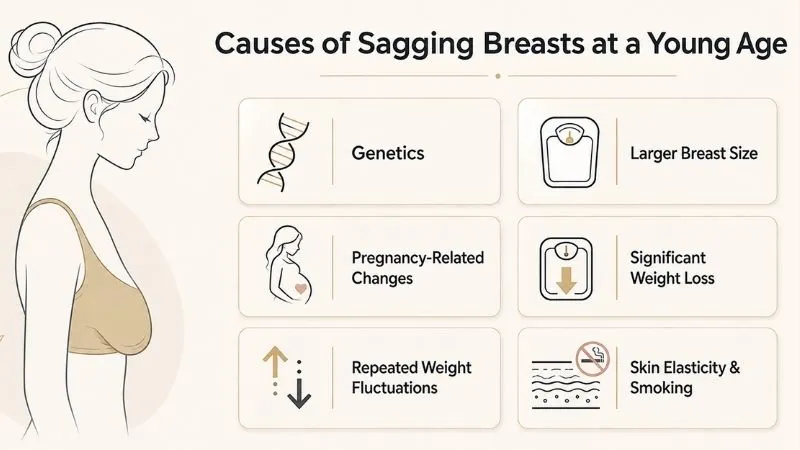
Various factors can contribute to the development of breast ptosis at a young age. These factors may act independently, or they may act in combination over time.
Genetics and natural breast structure
Genetic factors influence many of the characteristics that determine breast shape. These include skin thickness, elasticity, breast size and the distribution of fatty tissue and glandular tissue.
Some women’s breast tissue is naturally softer. Others have more elastic skin. For this reason, the distance between the nipple and the inframammary fold can vary from person to person.
Larger and heavier breasts
Larger breasts are heavier. Over time, this weight can put greater strain on the surrounding skin and supporting tissues. For this reason, women with larger breasts tend to notice sagging earlier than those with smaller breasts.
Pregnancy and breastfeeding
Pregnancy alter both the size and internal structure of the breasts. Hormonal changes during pregnancy prepare the breasts for milk production. As a result, breast volume increases and the skin stretches.
Following pregnancy and breastfeeding, the volume of breast tissue decreases. Not everyone’s skin recovers to the same extent. Consequently, the breasts may appear softer, with the upper part looking emptier or sagging more than before pregnancy. These changes become more pronounced after multiple pregnancies.
The effect of pregnancy on breast shape varies from woman to woman. Whilst some women notice fewer changes, others may experience more noticeable changes in breast volume or the position of the nipple.
Significant weight loss
Breasts contain fatty tissue, and excessive weight loss reduces breast volume. The skin that previously enveloped a fuller breast may remain loose once the volume has decreased. This leads to flattening of the upper part of the breast, excess skin, and the remaining breast tissue dropping lower. The extent of the change in breast volume depends on the total amount of weight lost, the initial breast size, skin elasticity and how fat is distributed throughout the body.
Young people tend to recover better in such situations. However, they do not return to their previous shape. For this reason, significant weight loss can also lead to sagging breasts in young women.
Repeated weight fluctuations
Recurring cycles of weight gain and loss cause the volume of the breasts to change on more than one occasion. Minor fluctuations in weight experienced in everyday life do not affect breast sagging. Significant and recurring fluctuations in weight can cause breast sagging in young people.
Skin elasticity and connective tissue
Firm breast skin contains collagen and elastin, which help the skin to stretch and provide support to the underlying tissues. The levels of these proteins decrease as we age. Some people may have skin that is naturally very elastic.
Smoking can also cause the skin to lose its elasticity at an earlier age. Smoking reduces blood flow to the skin and can adversely affect the structure of the supporting tissues.
Can exercise or poor posture cause sagging breasts?
There are no muscles inside the breasts. Exercise strengthens the chest muscles located beneath the breasts. For this reason, it cannot tighten loose breast skin or lift the breast tissue to a higher position.
Correcting one’s posture can help the chest area appear more open and upright. However, poor posture should not, on its own, be identified as a direct cause of breast ptosis.
Exercise may help improve posture and make the chest appear more upright. However, this does not change the actual position of the breast tissue.
Does not wearing a bra cause sagging breasts?
There is insufficient research to suggest that not wearing a bra causes permanent breast sagging. A bra provides support for the breasts whilst it is being worn. However, it does not strengthen breast tissue or cause the breasts to sag.
How can you tell if you have breast ptosis?
If you suspect breast ptosis, check for the following characteristics:
- The nipple is at the same level as the inframammary fold or below it
- The nipples point downwards
- A loss of fullness in the upper part of the breast
- The breast appears longer or lower
A Turkish plastic surgeon will assess the position of the breast, the skin structure and the distribution of breast volume together. The surgeon will then make a recommendation for treatment.
How to prevent sagging breasts at a young age
It is not possible to completely prevent sagging breasts. Certain habits can help to maintain overall skin quality and breast position:
- Maintain a stable body weight as far as possible
- Avoid smoking or give up smoking
- Protect the skin in the breast area from intense sunlight
- Follow a balanced diet that supports general health
- Exercise regularly to support general health, muscle tone and posture.
The points mentioned support skin elasticity but cannot guarantee that breast sagging will not occur at all.
Can sagging breasts become firm again naturally?
Sagging breasts cannot naturally return to their former shape. No cream, exercise or home remedy can lift the breasts. With a breast lift surgery Antalya, the breasts can be restored to their former position.
How to fix sagging breasts at a young age
Not every young woman with sagging breasts needs treatment. Treatment may be considered if the sagging bothers the patient and she regards it as a problem.
You may wish to consider a mastopexy (breast lift) to treat sagging breasts. In this operation, excess skin is removed from specific areas and the breast tissue is reshaped. During the procedure, the nipple and areola may also be repositioned to a more suitable location.
A breast lift in Antalya does not increase breast size. If you wish to achieve both a firmer shape and added volume, you may wish to consider breast augmentation surgery. For women with large and heavy breasts, a breast lift may be considered in conjunction with a breast reduction.
Dr Bülent Demir assesses each patient individually before recommending an appropriate approach. The appropriate approach depends on breast size, skin quality, the degree of sagging and the result the patient wishes to achieve. Future plans for pregnancy and potential weight changes are also taken into account.
If you are considering having a breast lift in Antalya, please contact us. Find out more about your treatment and prices.
Frequently asked questions
There is no minimum age for breast lift surgery in Antalya, Turkey. The patient must be emotionally ready, in good general health, and of an age at which they can understand the limitations and risks of the operation.
If the patient has not yet reached full physical maturity, or if significant weight loss is planned, the surgeon may recommend postponing the procedure. Planning a future pregnancy does not necessarily preclude breast lift surgery. However, pregnancy may affect the outcome of the surgery by altering breast volume and causing the skin to stretch again. Suitability is not determined by age alone; a personalised surgical assessment is required.
It is sometimes normal for a young person to have sagging breasts. If a person with large breasts has poor skin elasticity, they may sag slightly. It is normal for sagging breasts to occur due to anatomical reasons such as these.
Breast sagging can occur at a young age as a result of frequent and significant weight fluctuations or excessive weight loss. If this condition causes the patient distress, a breast lift operation may be considered.
However, a new or sudden change should not automatically be assumed to be normal breast sagging. If the change affects only one breast, or if it is accompanied by a lump, nipple discharge or skin changes, a medical assessment may be required.